
The reason Oha Casino Transaction History Supports Netherlands Player Management Skills
I can recall the instant I understood a basic transaction log might shift how I consider money ohascasino.com. It was never some grand revelation at a finance seminar. It happened while I was browsing my deposit history at Oha Casino. Like many people, I tended to see that list as nothing more than a dry record of deposits and withdrawals. But gradually, I commenced viewing it differently. The log turned into a window, revealing patterns I hadn’t noticed and decisions I’d easily forgotten. For someone residing in the Netherlands, where we are raised with a cultural emphasis on precise budgeting and digital banking, this feature feels differently. It brings an educational layer I hadn’t foreseen from an entertainment platform. I’ve devoted months observing to how this tool operates on my brain, and I’m certain it transforms a recreational activity into a real-world lesson in liquidity tracking. The system at Oha Casino changes in real-time, so I witness the direct result of every decision. That feedback loop, minor as it is, teaches me to consider before I act, a practice that spills directly into everyday Dutch life.
The cognitive bond Between Gaming Records and Fiscal Awareness
I’ve recognized something unusual but consistent. The mental gap between paying for entertainment and managing a household budget narrows the moment I sit down and actually examine my gaming logs. In the Netherlands, we’re brought up to keep an eye on our spending. Still, the excitement of a live game can override that training fast. By compelling myself to scrutinize the cold, hard data in the Oha Casino transaction history, I rebuild the thrill of the moment with the reality of my bank balance. This isn’t about killing the fun. It’s about ensuring the fun conforms inside a structure I can sustain. I find that going through a chronological list of my deposits sparks a shift in my head, moving from spontaneous mode to evaluation mode. That transition is a competence, and it transfers directly to how I deal with impulse buys in Dutch retail shops or late-night online marketplaces. The transaction log doesn’t scold me. It just shows me what happened, and that’s usually enough to change how I act next time.
Grasping Cognitive Dissonance in Spending
One of the most difficult lessons I’ve picked up from my transaction history is detecting cognitive dissonance in real time. There are evenings when I’m sure I played lightly, just a few rounds, nothing serious. Then the aggregated data at Oha Casino tells a contrasting story, a more thorough one. That clash between my memory and the factual record is a real wake-up call. In the Netherlands, we value nuchterheid, a kind of clear-headedness, and this aspect keeps me honest when my brain wants to bend the truth. I’ve learned to overcome the natural instinct to minimize losses and exaggerate wins by depending on the timestamped data. Addressing the facts without emotional filters has made me more controlled across the board. I now apply the same examination to my subscription services and daily contactless payments, constantly wondering whether my mental version of my spending matches the digital reality my bank provides. The transaction log taught me that emotions are not facts, and numbers don’t care about my excuses.
How Oha Casino’s Interface Encourages Real-Time Budget Tracking
The user interface at Oha Casino is laid out in a way that makes financial tracking feel natural, more so than some dedicated budget apps I’ve tried in the Netherlands. The transaction history isn’t hidden behind three menus and a settings gear. It lies where I can access it quickly, which promotes a habitual check-up. I regard this feature like a daily health check, a quick pulse on my recreational liquidity. The clarity of the dates, amounts, and payment methods lets me reconcile my entertainment budget instantly, no spreadsheet needed. For a Dutch player using iDEAL or other instant banking methods, the integration means the delay between intent and record is nearly zero. That promptness matters because it removes the dangerous float period, the interval where unrecorded spending piles up quietly and develops into a nasty surprise at the end of the month. I’ve been burned by that float before, and the Oha Casino interface simply doesn’t allow it.
Defining Mental Limits Through Visual Data
I’ve developed a personal strategy around the visual layout of the Oha Casino transaction log. Instead of depending only on external deposit limits, which are valuable as a safety net, I monitor the flow of my history. If I see a cluster of transactions packed into a short timeframe, that visual pattern functions as a red flag. It indicates me I might be chasing a mood rather than savoring a game. This is a Dutch approach to self-regulation, based on visual cues and self-awareness rather than rigid external blocks. The transaction history becomes a narrative of my evening. I can determine exactly when I decided to take a break and when I opted to continue. That narrative, built from data points alone, is an effective tool for enhancing my future decisions. It keeps my entertainment a conscious choice instead of a reflex.
Converting Game History Skills to Household Budgeting in the Netherlands
I’m convinced the analytical discipline I built by studying my Oha Casino transaction history has transformed me into a better manager of my household finances. The Dutch system of quarterly taxes, mortgage calculations, and energy contracts demands a high level of financial literacy. The habit of regularly logging into a portal to check a stream of debits and credits is the same skill set. I no longer find it tedious to scrutinize my bank statements because I’ve conditioned my brain to perceive those numbers as a story of my choices. The move from gaming data to household data feels natural. It’s all just information poised to be interpreted. I’ve applied the same reconciliation techniques I use to verify my gaming balance to my monthly grocery spending, spotting discrepancies and adjusting my behavior with a precision I previously lacked.
Harnessing Payment Method Transparency for More Informed Choices
One of the most overlooked parts of the Oha Casino transaction history is the granular detail on payment methods. As a Dutch player, I move between e-wallets and direct bank transfers based on the situation, and seeing the trail of those choices is eye-opening. The history lets me audit which method I rely on excessively and which one gives me a smoother withdrawal experience. I’ve hardly ever found this level of payment management on other digital entertainment platforms. By analyzing the data, I’ve refined my financial funnel to reduce friction and sidestep unnecessary conversion fees that eat into my budget. This skill of auditing transaction channels carries over directly to managing my freelance income and even my regular Dutch household bills. I’ve developed better at selecting the right financial tool for the right context, a habit born from the analytical routines I formed while examining my gaming history.
The Value of Security Verification within Personal Financial Audits
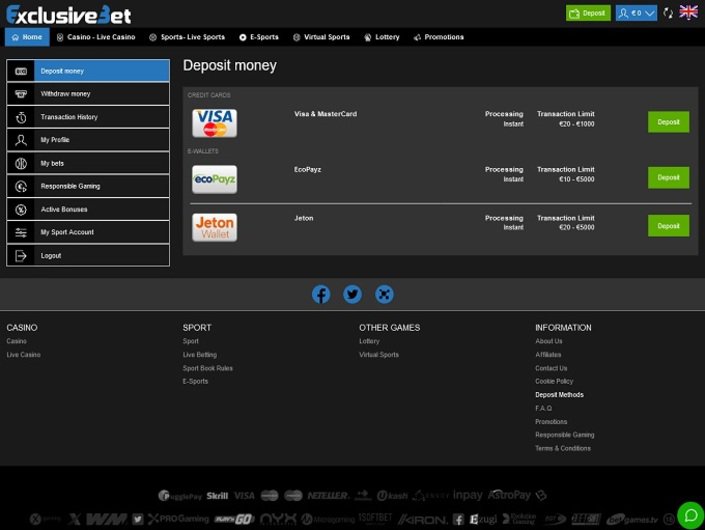
Safety is a top concern for any Dutch digital citizen, and I view the transaction history at Oha Casino as a critical security safeguard. Regularly reviewing my log goes beyond tracking outlays. It is about verifying that no unauthorized access has occurred. Digital fraud keeps getting more sophisticated, and the habit of scanning my transaction feed for anomalies adds a protective layer. This routine has bled into my personal banking activities, where I now check my transaction history far more frequently than before. I view it like a digital burglar alarm check. If I spot a transaction I don’t know, even a small transaction, I can act immediately. That proactive security approach, developed through the practice of checking my gaming history, ensures I’m always the first line of defense against potential financial breaches in my Dutch accounts.
Identifying Patterns and Stopping Negative Cycles Early
Pattern recognition is a essential skill in gaming and finance alike, and the Oha Casino transaction history serves as my chief detection tool. I can zoom out and examine my activity over a month or a quarter, detecting cycles that coincide with payday or stressful weeks. In the Netherlands, the salarisstrook moment often triggers relaxed spending, and my gaming history matches that spike. Observing the pattern exposed lets me foresee it and distribute funds more wisely before the temptation strikes. Stopping a negative cycle requires admitting it exists, and the data supplies proof I cannot ignore. I’ve employed this insight to create counter-cyclical budgets, deliberately lowering my entertainment allocation during known high-stress periods to prevent emotional spending. That tactic has preserved me significant money across all areas of my life, not just gaming.
The Part of Time Stamps in Behavioral Correction
The exact time stamps on every transaction at Oha Casino have been a unexpected source of behavioral correction for me. I noticed a pattern where late-night sessions proved to be less controlled than afternoon ones. The data offered no judgment. It just displayed me the time. That led me to establish a personal rule, confining my high-focus gaming to hours when I’m typically more alert. This is a governance lesson that goes beyond money. It addresses energy and cognitive resource allocation. In the context of the Dutch work-life balance, safeguarding my peak cognitive hours ensures that my leisure stays separate from my professional productivity. The transaction history, by recording the when, became an incidental time-management coach, assisting me arrange my day around my natural rhythms instead of fighting against them.
Employing Data to Redefine Entertainment Value, Not Just Cost
The transaction history at Oha Casino has helped me to measure value, not just cost. In the Netherlands, we often refer to waar voor je geld, value for money. The history lets me link my spending with the duration and quality of my entertainment. A long, pleasurable session with a small net deposit registers as high-value entertainment. A quick, pricey burst with little playtime shows up as low-value. This move from pure expense tracking to value assessment is a advanced management skill. I now apply it to all my leisure spending, from cinema tickets to dining out, constantly evaluating the return on enjoyment. The Oha Casino transaction history isn’t just a list of numbers. It’s a record of my happiness efficiency, a tool that has enhanced how I allocate my discretionary income in the Netherlands.
Developing Long-Term Discipline Through Consistent Review Habits
Discipline works like a muscle that requires regular exercise, and I’ve discovered no better gym for my financial discipline than the Oha Casino transaction history. The uniformity of the data, always available and never changing, gives me a stable platform to practice honesty. In Dutch culture, where directness is valued, this tool communicates in a language of blunt facts. I’ve built a routine around this review, and that routine has stabilized my financial life. The long-term benefit isn’t just about preserving money on a specific platform. It’s about forming a psychological framework that resists denial and welcomes reality. I’m now more confident in my ability to oversee complex financial products and navigate the Dutch tax landscape because I’ve perfected the basics of reading a transaction log. The journey from casual player to sharp financial analyst is a path lined by the simple, powerful, and transparent data that Oha Casino provides.
I believe the Oha Casino transaction history is an underutilized tool that goes far beyond its primary function. For the modern Dutch player, it acts as a training ground for the precise, analytical, and disciplined money management skills needed in today’s digital economy. By transforming every click and deposit into a clear, reviewable record, it bridges the gap between recreational spending and serious fiscal responsibility. I’ve personally undergone a shift in my financial awareness, moving from a passive spender to an active auditor of my own life. The platform demonstrates that with the right mindset, a simple log of transactions can become one of the most effective educational tools for long-term wealth management and personal discipline.